
Whiskey
Distillery Profiles
United States
- Buffalow
- List Item #2
- List Item #3
-

01
Copied
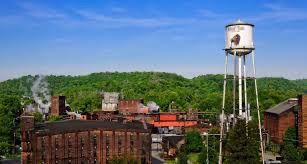
Maker’s MarkMaker’s Mark Distillery, established in 1953 by Bill Samuels Sr. on the historic site of Burks Distillery in Loretto, Kentucky, is known for replacing traditional rye with soft red winter wheat in its mash, producing a distinctively smooth and full-flavored bourbon. This family-operated venture emphasizes traditional techniques, such as hand-dipping each bottle with its iconic red wax seal and ensuring a consistent, quality product.
Maker’s Mark
Maker’s Mark Distillery, established in 1953 by Bill Samuels Sr. on the historic site of Burks Distillery in Loretto, Kentucky, is known for replacing traditional rye with soft red winter wheat in its mash, producing a distinctively smooth and full-flavored bourbon. This family-operated venture emphasizes traditional techniques, such as hand-dipping each bottle with its iconic red wax seal and ensuring a consistent, quality product.
Maker’s Mark

Company: Beam Suntory
Location: Loretto, KY
Date Established: 1953
Legacy Names: Burk Distillery
Production Volume: 2.3 Million cases per annum (approximately 400 barrels of whiskey per day)
Master Distiller: Denny Potter
Website: www.makersmark.com/en-us/
Products:
Maker’s Mark Original – The classic bourbon made with soft red winter wheat (70% corn; 16% wheat; 14% malted barley).
Maker’s Mark 46 – This same mash bill as the original Maker’s Mark, 46 is enhanced with aging in barrels with French oak staves.
Maker’s Mark Cask Strength – The same mash bill as the original Maker’s Mark bottled at cask strength to preserve its intensity.
Maker’s Mark Cellar Aged – Aged in a limestone cellar, this variant offers a unique blend of aged bourbons.
Maker’s Mark Private Selection – A program that allows customization of the flavor profile using different wood staves.
Maker’s Mark 101 – A higher proof version of the original Mash Bill for a stronger flavor.
Maker’s Mark Wood Finishing Series – A series that varies annually, focusing on different wood-finishing techniques to enhance flavor profiles.
History:
The Samuels family, with roots stretching back over 250 years in Kentucky, has played a pivotal role in the evolution of American whiskey. The family’s distilling legacy began with Robert Samuels, who served in George Washington’s Continental Army and later settled in Kentucky with a 60-gallon copper still in 1784. Robert’s descendants, including his son John and grandson T.W. Samuels, continued this tradition. T.W. established the family’s first commercial distillery in 1844 in Nelson County, which produced the successful T.W. Samuels Straight Bourbon Whiskey for over a century.
In the early 1950s, the legacy took a significant turn with Bill Samuels Sr., T.W.’s great-grandson. Bill felt the traditional family bourbon recipe was too harsh and, after selling the old distillery, he literally burned the family recipe to start anew. Along with his wife Margie, Bill crafted a more refined and accessible bourbon that would eventually become Maker’s Mark. They purchased a distillery in Loretto, Kentucky, with distinctive Victorian-style architecture, featuring its own limestone-filtered water source, which became the foundation for Maker’s Mark Distillery. This marked a transformation in bourbon production, elevating it from a bottom-shelf staple to a premium category leader. Today, under the guidance of Rob Samuels, the eighth-generation distiller, Maker’s Mark continues to embrace sustainable practices and innovation while holding true to the handcrafted techniques that defined its past.
Bill Samuels Sr. aimed to make a whiskey that was pleasant to drink without the harshness typically associated with traditional bourbons. Instead of using rye, which was common in bourbon recipes at the time, he chose to experiment with red winter wheat. This choice was pivotal, as it imparted a milder and sweeter flavor to the whiskey. To refine his recipe quickly without waiting for years of aging, Bill used an innovative method by baking bread with different grain recipes to assess their flavors.
Margie Samuels, Bill’s wife, also played a crucial role in defining the brand’s iconic image. She designed the distinctive packaging, which included the square-shaped bottle and the hand-dipped red wax seal that makes Maker’s Mark recognizable. Furthermore, she is credited with inventing bourbon tourism, turning the distillery into a visitor attraction that helped build the brand’s identity and draw in whiskey enthusiasts.
Throughout the decades, Maker’s Mark has grown significantly but has maintained its commitment to craft and tradition. This dedication is evident in their meticulous production process, where each bottle is still hand-dipped in wax and the bourbon is aged to taste rather than time, ensuring consistent quality over the years.
In 2014, Maker’s Mark was acquired by Beam Suntory, joining one of the largest distilled beverage producers in the world, yet the Samuels family continues to play a vital role in its operations. Under the guidance of Rob Samuels, the eighth-generation whiskey maker, Maker’s Mark respects its heritage while embracing innovation, as seen in their releases like Maker’s Mark 46 and the Wood Finishing Series.
-
02
Copied
Buffalo TraceBuffalo Trace Distillery, America’s oldest continuously operating distillery, currently helmed by Master Distiller Harlan Wheatley, has been at the forefront of bourbon craftsmanship, pioneering many of the techniques and traditions that define the industry today. With a legacy of innovation and experimentation, Buffalo Trace continues to produce award-winning bourbons, such as the highly coveted Antique Collection, and serve as a lynchpin on Kentucky’s Distillery Trail.
Buffalo Trace
Buffalo Trace Distillery, America’s oldest continuously operating distillery, currently helmed by Master Distiller Harlan Wheatley, has been at the forefront of bourbon craftsmanship, pioneering many of the techniques and traditions that define the industry today. With a legacy of innovation and experimentation, Buffalo Trace continues to produce award-winning bourbons, such as the highly coveted Antique Collection, and serve as a lynchpin on Kentucky’s Distillery Trail.
Buffalo Trace Distillery

Company: Sazerac
Location: Frankfort, KY
Date Established:
Legacy Names:
Production Volume: 2,000 Barrels per day
Master Distiller: Harlan Wheatley (2005 – present)
Website:
Products:
History:
Origins and Early History
The roots of Buffalo Trace Distillery stretch back to 1773, when the area now known as Leestown was first surveyed and settled by pioneers including Hancock Taylor. The region, known for its buffalo crossing path along the Kentucky River, became a prime location for early American settlers and traders. By the late 18th century, distilling began to take hold due to the abundant resources of corn and limestone-filtered water, essential for bourbon production.
In 1812, the first distillery on the site was established by Harrison Blanton. Over the decades, the distillery underwent various ownership changes and improvements. However, it was the arrival of Colonel Edmund Haynes Taylor, Jr. in 1870 that marked a pivotal turn in its history. Taylor introduced innovative techniques such as copper fermentation tanks, a first-of-its-kind steam heating system for the warehouse, and the implementation of a more efficient sour mash technique. These innovations not only improved the quality of the whiskey but also helped standardize production methods that are still in use today.
Colonel E.H. Taylor’s Innovations
Colonel Edmund Haynes Taylor, Jr. played a pivotal role in shaping the Buffalo Trace Distillery into a benchmark for quality and innovation in the bourbon industry. When Taylor purchased what was then known as the Swigert Distillery in 1870, he embarked on an ambitious project to modernize and enhance every aspect of the production process. His investments introduced cutting-edge technologies and methodologies, such as copper fermentation tanks and a state-of-the-art steam heating system for the aging warehouses, which were revolutionary at the time. Taylor’s insistence on using only the finest ingredients and his meticulous attention to the distillation process set new standards for bourbon quality, earning him the nickname “the father of the modern bourbon industry.”
Taylor’s vision extended beyond just technological advancements; he was also a master of building and aesthetics, which played a crucial role in marketing his whiskey during a time when the industry was fiercely competitive. He constructed iconic buildings that remain central to the distillery’s operations today, such as the Taylor Building, which is recognized for its architectural significance and function. These contributions significantly enhanced the distillery’s reputation, allowing it to command respect and a premium in the market. Taylor’s legacy at the distillery is a testament to his understanding of both the art and science of bourbon making, establishing a foundation that would influence generations of distillers at Buffalo Trace and across the industry.
George T. Stagg
George T. Stagg’s contributions to the development of the Buffalo Trace Distillery were foundational in transforming it into a major player in the American whiskey industry. When Stagg acquired the distillery from Colonel E.H. Taylor in 1878, he was already familiar with its operations and potential, having been a whiskey salesman who appreciated the quality of its products. Stagg was instrumental in expanding the distillery’s capacity and modernizing its facilities, which helped it survive and thrive through turbulent times, including the economic downturns of the late 19th century and the challenging Prohibition era. His leadership not only ensured the distillery’s survival but also set high standards for product quality and innovation that are still honored today.
Under Stagg’s guidance, the distillery, which was renamed in his honor, became known for its technological advancements and increased production efficiency. He introduced a steam heating system in the aging warehouses—the first of its kind—which significantly improved the quality and consistency of the aging process. This innovation was a critical development in the bourbon industry, leading to smoother and more complex flavor profiles in the whiskey. Stagg’s vision and dedication to quality laid a robust foundation for the distillery’s future success, allowing it to emerge as a leader in the bourbon industry, a legacy that continues to influence the distillery’s operations and ethos to this day.
Prohibition and its Challenges
During the Prohibition era (1920-1933), the Buffalo Trace Distillery, (then known as the George T. Stagg Distillery) faced one of its most challenging periods. However, it managed to not only survive but also to maintain a level of operational continuity that was rare among distilleries at the time. This was largely due to its ability to secure one of the few permits available for producing medicinal whiskey. This permit allowed the distillery to legally produce and sell whiskey, under strict regulations, for medicinal purposes. The ability to continue operations during Prohibition gave the distillery a significant advantage, allowing it to preserve its equipment and expertise, and to resume full production more quickly once Prohibition was lifted.
Moreover, the period of Prohibition forced the distillery to innovate in ways it might not have otherwise. It adapted its business model to focus on medicinal markets, ensuring compliance with government regulations while maintaining the quality of its product. The experience of navigating these regulatory challenges prepared Buffalo Trace Distillery for future market expansions and regulatory environments. By the time Prohibition ended in 1933, the distillery was well-positioned to capitalize on the renewed public demand for bourbon, leading to a period of significant growth and development. This foresight and adaptability set the stage for its later successes and helped cement its reputation as a resilient and innovative player in the bourbon industry.
Mid-20th Century Developments
During the era of Schenley Industries’ ownership, which began in 1929, the distillery underwent significant transformation and growth. Schenley, recognizing the potential of the bourbon market post-Prohibition, initiated a substantial expansion of the distillery’s facilities. This period saw the construction of many new buildings, including advanced distillation and fermentation facilities, which greatly increased the distillery’s production capacity. The introduction of modern equipment and techniques under Schenley’s management helped standardize and enhance the quality of the bourbon produced, setting new industry standards. The era marked by Schenley’s ownership was crucial in propelling the distillery into a new phase of industrial prowess and innovation, laying the groundwork for future success.
Schenley Industries also played a critical role in promoting bourbon as a distinguished American spirit during their tenure at the distillery. The company invested in marketing and branding strategies that elevated the profile of their whiskey products nationally. By leveraging the rich heritage and the reputation of the distillery, Schenley successfully positioned it as a leader in the burgeoning American whiskey market. Their efforts during this time not only boosted sales but also helped inculcate a culture of appreciation for high-quality bourbon, which would later pave the way for the craft bourbon renaissance. The distillery’s growth under Schenley was not just about physical expansion but also about enhancing the prestige and quality perception of American bourbon globally.
The 1980s
The 1980s marked a transformative decade for the Buffalo Trace Distillery, characterized by strategic shifts and innovative product launches that would set the stage for its future successes. During this period, the distillery was under the ownership of the Age International, which was part of a joint venture including Takara Shuzo of Japan. This era was pivotal as it witnessed the birth of Blanton’s Single Barrel Bourbon in 1984, the world’s first single-barrel bourbon commercial release. This innovative product was conceptualized by Elmer T. Lee, the distillery’s master distiller at the time, as a tribute to Colonel Blanton’s legacy. Blanton’s launch not only paid homage to the distillery’s storied past but also targeted the growing premium spirits market, particularly in Japan, setting a new trend in the bourbon industry.
Moreover, the 1980s were significant for the distillery’s strategic global positioning and branding efforts. The introduction of Blanton’s Single Barrel was a game-changer that helped differentiate Buffalo Trace from other bourbon producers. The unique approach of marketing single-barrel bottles appealed to connoisseurs and collectors, enhancing the distillery’s reputation as a producer of fine, high-quality bourbon. This decade laid the groundwork for Buffalo Trace’s modern identity, focusing on craftsmanship and heritage, which resonated well with the evolving tastes of spirits consumers worldwide. The strategic decisions and innovations during the 1980s not only revitalized the distillery’s operations but also redefined its market approach, contributing significantly to its longevity and success in the competitive spirits industry.
Modern Era and Global Recognition
The 1990s represented a crucial turning point for the Buffalo Trace Distillery, highlighting its transition into a modern bourbon powerhouse. This era began with a significant change in ownership when the distillery was acquired by the Sazerac Company in 1992. This acquisition marked a new chapter, focusing on revitalizing the distillery’s brand and infrastructure. In 1999, a substantial rebranding effort culminated with the distillery being renamed Buffalo Trace, in honor of the ancient buffalo crossing on its grounds. This rebranding coincided with the launch of the distillery’s flagship bourbon, also named Buffalo Trace, which quickly became a symbol of the distillery’s commitment to quality and heritage. This period was characterized by significant investments in expanding production capabilities and enhancing the visitor experience, setting the stage for a resurgence in popularity and a focus on premium, small-batch, and single-barrel bourbons.
Entering the modern era, Buffalo Trace Distillery has continued to excel as a leader in innovation within the whiskey industry. It has expanded its range of highly sought-after products, including the Antique Collection and the Van Winkle line, which have garnered international acclaim and a dedicated following. The distillery’s commitment to experimentation is evidenced by its pioneering work with the Single Oak Project and various experimental bourbons, which have explored different aspects of whiskey-making, including variations in barrel wood, aging conditions, and mash recipes. These innovations not only reflect Buffalo Trace’s dedication to crafting unique and high-quality spirits but also its role in driving the bourbon industry forward. The distillery’s efforts have been recognized with numerous awards, affirming its status as a benchmark for excellence in an increasingly competitive market.
Innovation
Buffalo Trace Distillery has long been recognized for its pioneering role in the field of bourbon innovation and experimentation, pushing the boundaries of what is possible in whiskey production. One of the hallmark initiatives of Buffalo Trace is its Experimental Whiskey Collection, which began in the late 1980s. This program experiments with various aspects of whiskey making, including different types of wood, barrel treatments, fermenting techniques, and grain types. Each experiment aims to discover how these variables affect the taste and quality of the final product. This dedication to experimentation not only enhances their own product lineup but also contributes to the broader whiskey industry’s understanding of craft and production processes.
Moreover, Buffalo Trace’s Single Oak Project is another testament to its commitment to innovation. Launched in 2011, this project was one of the most extensive bourbon experiments ever undertaken. The distillery produced 192 barrels of bourbon, each with whiskey from trees with different wood grains, harvested from different locations, and each barrel charred to different specifications. The bourbons were then aged and evaluated to determine how each variable influenced the flavor profiles. Such projects underscore Buffalo Trace’s role as a leader in whiskey experimentation, continually seeking to refine and redefine the standards of premium bourbon and whiskey, keeping both connoisseurs and casual drinkers intrigued by what might come next.
Item #2
Item #3
- Buffalow
- List Item #2
- List Item #3
[qcld-ilist mode=”one” list_id=”3585″ upvote=”on” main_title=”1″ embed_option=”1″ boxed_layout=”1″ column=”2″ style=”premium-style-02″ display_copy_share=”false” disable_lightbox=”false”]